Welcome to Stronghold
A house with
a place in the story
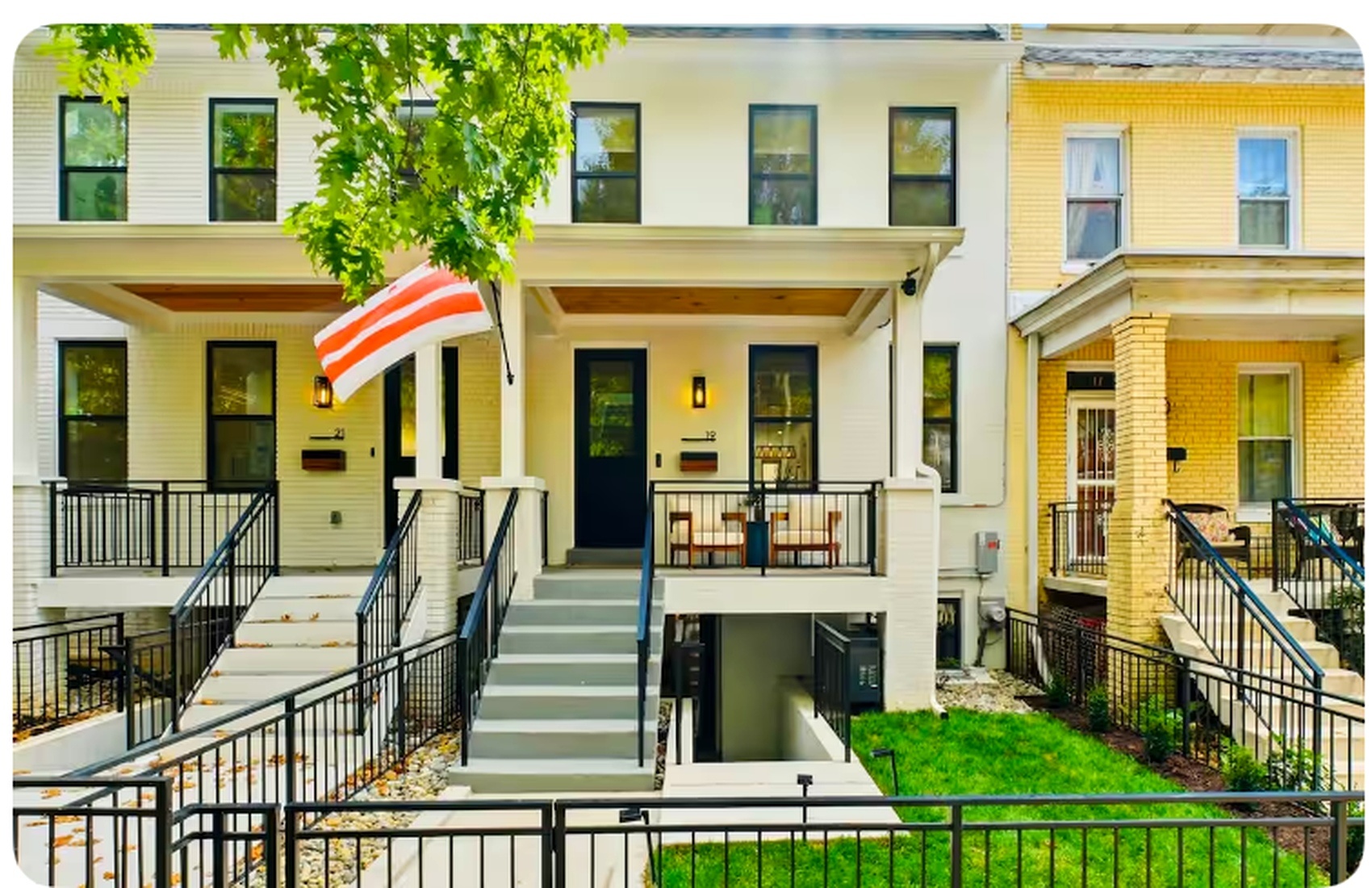
Welcome to 19 Channing Street NE.
This house has stood on Channing Street for more than a century. It was not built alone. A D.C. building permit dated December 1, 1920 authorized developer and builder Herman R. Howenstein to construct six brick houses here, with plans by architect L. T. Williams.
One of Washington's smallest neighborhoods
Those rows of brick houses became part of Stronghold, a tiny pocket of Northeast Washington tucked between North Capitol Street, Michigan Avenue, and historic cemetery grounds. Its size and unusual boundaries have always helped it feel like a small enclave within a much larger city.
By the middle of the 20th century, Stronghold had developed into a close-knit community where families purchased these rowhouses, raised children, knew their neighbors, and often stayed for generations.
The houses were more than addresses. They became family homes, gathering places, and anchors for children who grew up together while adults looked out for one another. Some homes remained in the same families across generations.
Stronghold was not a name chosen by a developer or politician. It grew out of the neighborhood itself.
The story moves to the backyard
And part of the story of how Stronghold got its name happened remarkably close to where you are sitting.
The alley in this story is our backyard alley.
Continue to the alleyThe alley behind 19 Channing
The Alley
Behind This House
Where neighborhood football, a trip to the movies, and a phrase among teenagers became the name of a Washington neighborhood.
Around 1960, Malcolm J. Taylor Jr. had returned to Washington after serving in the U.S. Air Force and was working at the Library of Congress.
In the evenings, according to Stronghold's recorded oral history, Taylor watched neighborhood boys playing two-hand-touch football in the alleys between Bryant and Channing Streets, along the cemetery wall.
From alley games to the Midget Colts
Taylor thought the boys had talent and wondered what they could do on a real field. With help from neighborhood families, the informal games grew into an organized youth football team called the Midget Colts, named for the Baltimore Colts.
Neighborhood accounts recall hundreds of local children trying out, while parents, coaches, cheerleaders, and neighbors rallied around the team. The Colts traveled across Washington to play teams from other communities.
The importance of the team went beyond football. Families traveled together. Adults volunteered. Children had something that belonged to them. An already close-knit neighborhood became even closer.
Then three teenagers went to the movies
A trip to the movies.
A neighborhood's name.
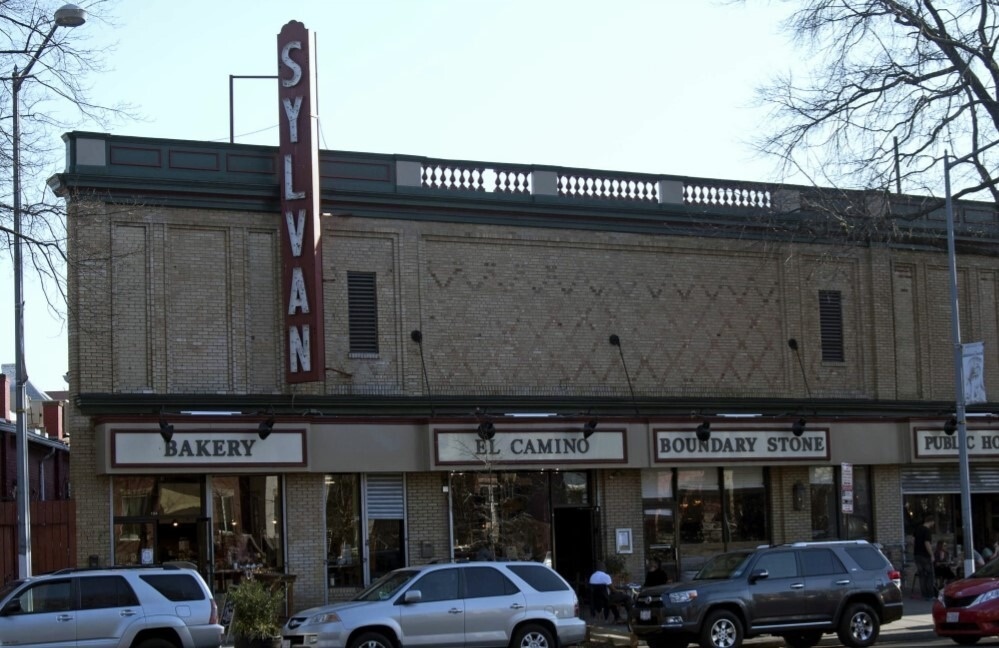
According to neighborhood oral history, three teenage assistant coaches went to the old Sylvan Theatre on Rhode Island Avenue to see a western. Later Stronghold histories identify the film as the 1950 movie Broken Arrow.
In the film, the mountain refuge associated with Apache leader Cochise is repeatedly called a "stronghold."
The word stuck with the teenagers. After the movie, when they were elsewhere in Washington and it was time to go home, they began saying they were "going back to the Stronghold." Other neighborhood kids picked it up, and the phrase spread.
The name fit. Cemetery grounds enclosed much of one side of the community, several streets ended rather than passing through, and Taylor remembered the neighborhood as almost "one way in, one way out." Inside those few blocks were families who knew one another, children who grew up together, and generations who called the same rowhouses home.
It really was a stronghold.Continue beyond the end of Channing Street
Beyond the end of Channing Street
Our Neighbor
Next Door
The cemetery beside Stronghold is older than the neighborhood around it.
Follow Channing Street to the end
Walk toward the end of Channing Street and the street simply stops. It is one of several Stronghold streets shaped by the cemetery boundary.
The cemetery did not arrive after the neighborhood. It was here first. Long before the rowhouses of Channing Street appeared, this part of Washington was countryside beyond the developed city.
What is now Glenwood Cemetery began as part of a farm known as Powell's Dividend. In 1809, Dr. Phineas Bradley purchased the property and renamed it Clover Hill. Bradley had come to Washington in connection with moving the United States Post Office Department to the new capital and later became Assistant Postmaster General.
In 1854, before the Civil War, Congress chartered Glenwood Cemetery on the old Clover Hill property.
It was created in the tradition of the 19th-century rural cemetery: not simply a burial ground, but a carefully landscaped place of winding roads, trees, monuments, and quiet reflection. More than 170 years later, it remains our neighbor at the end of the street.
Dr. Phineas Bradley names the property Clover Hill
Congress charters Glenwood Cemetery
From Channing Street to the Capitol
A Washington connection
you can actually visit
Among the thousands of Washingtonians resting at Glenwood is a man whose work almost every visitor to Washington has seen, even if they do not know his name.
Constantino Brumidi was the Italian-born artist whose frescoes transformed the interior of the United States Capitol. His best-known work is directly overhead when you stand in the center of the Capitol Rotunda: The Apotheosis of Washington, the enormous fresco inside the dome.
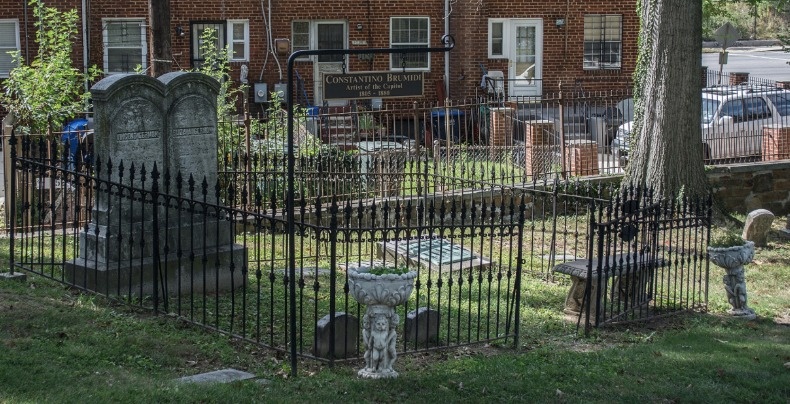
Brumidi died in 1880 and was buried at Glenwood. His grave was unmarked, and over time its location was effectively lost. Decades later, researchers rediscovered his burial place, and a marker was finally placed there in 1952.
Glenwood holds many other stories too: artists, public servants, families, elaborate Victorian monuments, and generations of Washingtonians whose lives unfolded beyond the marble monuments downtown.
Two Washingtons, one story
It is a small connection between two very different Washingtons.
One is the Washington of marble halls, presidents, and monuments. The other is the Washington outside our front door: century-old rowhouses, neighborhood football games in the alley, dead-end streets, and generations of people who simply called this place home.
Welcome to our
little corner of it.
Read it your way
The story of
19 Channing
Keep a copy to read during your stay.
Historical sources
This story is presented from the 19 Channing history booklet.
House and neighborhood: D.C. HistoryQuest building permit record; D.C. planning materials; Stronghold neighborhood histories.
The alley and the neighborhood name: Stronghold Civic Association oral history and neighborhood history materials, including the Malcolm J. Taylor Jr. account.
Glenwood and Brumidi: Glenwood Cemetery; U.S. Capitol; D.C. historic preservation and planning sources.
The Sylvan Theatre and Brumidi grave photographs are reproduced from the booklet. The house photograph is from our listing.
Read the history booklet ↗